It’s essential to understand the root cause of icicles and ice dams so you can avoid them and the issues they cause. Icicles are pretty, but they can harm your roofing system. Their presence may indicate you also have a troublesome ice dam, but ice dams aren’t always accompanied by icicles.
Read on to gain valuable insight into what causes ice dams and icicles to form and steps you can take to prevent them.
Winter Woe #1—Ice Dams
What Is an Ice Dam?
An ice dam is a build-up of ice on your roof’s edge. The problem is that it keeps melting snow from draining off your roof and causes a backup of standing water. This can harm your roof, walls, ceilings and more.
How Do Ice Dams Form?
- Snow
- Heat loss
- Freezing temperatures
When a winter storm piles snow on your roof, if your roof is a consistent temperature, the snow ultimately slides off without creating issues. But when your roof’s temperature varies, and the top portion of it is above freezing while the lower portion is below freezing, an ice dams form.
The snow melts from your roof’s top portion, but the water refreezes when it reaches the lower (colder) part of your roof. This cycle causes ice dam formation. The ice dam keeps snow and moisture from draining away from your roof. Standing water trapped on your roof has to go somewhere, and that’s what can cause damage to your home.
Signs You May Have Ice Dams
- Is there an abundance of snow on the ground and on your porch, but not your roof? This is a sign that heat is escaping your attic because of inadequate home insulation and poor ventilation.
- Is there moisture present in your attic? If your attic is moist during the winter, it’s likely that ice damming has compromised the membrane of your roof.
- Are there damp areas on your home’s ceilings? This indicates a roof issue, and it’s very possibly caused by ice dams.
Root Causes of Ice Dams
- Poor attic insulation – When your attic is inadequately insulated, heat is transferred to your roof and causes it to be warmer than outdoor temperatures. This will eventually cause ice dam formation.
- Heat loss – This common cause of ice dams can originate due to air leaks, heat expelled from your chimney, and poorly positioned exhaust systems (dryer vents and plumbing). When these are located on your roof, heat melts the snow and ice, causing a vicious cycle of thawing and refreezing.
- Abrupt temperature changes – When temperatures swing suddenly, it creates the ideal conditions for ice dams to form.
How Ice Dams Cause Harm
- Water infiltration – Ice dams cause water damage. It may seep under your asphalt shingles, infiltrate your roof decking (causing it to rot, mold, and deteriorate), and leak into your home. You’ll notice water in your attic and in the ceilings of your home.
- Shingle damage – Ice dams can weaken the integrity of your asphalt shingles.
- Gutter issues – Gutters may warp or break under the weight of ice dams.
Winter Woe #2 for Your Roof—Icicles
What Are Icicles?
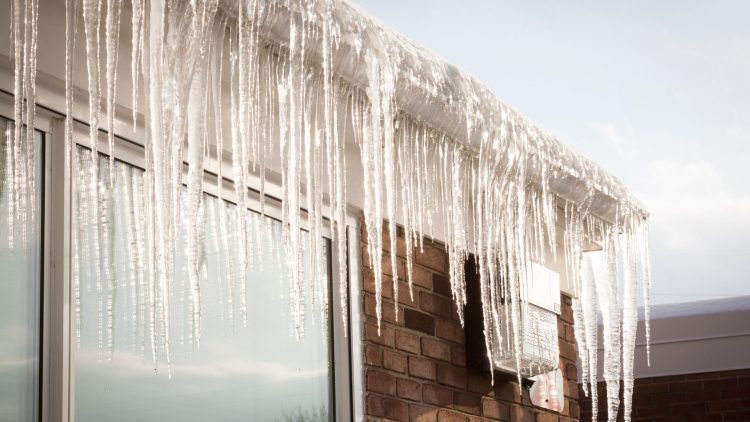
An icicle is a long piece of ice that hangs along your roof’s edge. Icicles are often a sign of an ice dam on your roof, but they don’t cause ice dams. You may even have ice dams without icicles.
What Causes Icicles to Form?
Icicles require three ingredients to accumulate:
- Snow
- Heat loss
- Freezing temperatures
Unlike ice dams, icicles form on your roof’s edge rather than on the bottom portion of your roof itself. So icicles are easier to spot.
How Icicles Cause Damage
Icicles are not as concerning as ice dams when it comes to damage. They may fall on someone walking by them, and could harm your gutters. But the bigger thing they signal is they often indicate ice dams are present, which can harm your roofing system, gutters, and home interior.
Icicle and Ice Dam Prevention Tips
Address the Underlying Cause of Ice Dams
Inconsistent roof temperatures are the root cause of most ice dams. An experienced contractor can diagnose your roof’s issues and create a plan to help you alleviate ice dams for good. The plan may include:
- Increase insulation – Adequate insulation will help keep roof temperatures consistent and ensure ice dams are kept at bay.
- Improve ventilation – Without proper ventilation, the heat that enters your attic won’t be able to escape and will cause snow to melt on your roof.
- Boost attic air sealing – Hire a professional to seal air leaks from your home into your attic.
- Hire a pro to remove snow from your roof – Climbing on your roof can be dangerous. Contact a professional to deal with snow buildup.
Realize that ice dams aren’t always preventable. Sometimes they just occur! However, if you do your part to keep them from forming, you’ll be less likely to see them develop, and you’ll prevent the hassle of dealing with the damage they leave in their wake.
Get a Gorgeous, Durable Roof Replacement Installed by Our Experienced Crew
If you notice ice dams forming on your roof, contact a reputable roofing contractor to have them removed, and then address the underlying cause to keep ice dams from re-forming. If you need increased insulation, ventilation, or a new roof in order to avoid harmful ice dams and icicles this winter, we can help!
At Bluff City Exteriors, as a local, family-owned business, we have a deep understanding of the needs and preferences of our community. Our commitment to honesty and integrity is at the core of our business values. And we are an Owens Corning Preferred Contractor, so we install roofing according to the manufacturer’s standards. Learn more about how our roof replacement services can enhance your home’s curb appeal while safeguarding it from the elements—including ice dams.